Aminopeptidases belong to exonucleases, which can sequentially hydrolyze amino acids from the amino end of the polypeptide chain. They are often used in combination with endonucleases. In the hydrolysis of animal and plant proteins, the bitter short peptides produced by hydrolysis are decomposed to weaken the bitterness of the hydrolysate and enhance the flavor of the protein solution; Condiment production promotes the generation of free amino acids and enhances freshness; It can also be applied to fermented meat products to optimize the accumulation of flavor compounds.


| Aminopeptidases belong to exonucleases, which can sequentially hydrolyze amino acids from the amino end of the polypeptide chain. They are often used in combination with endonucleases. In the hydrolysis of animal and plant proteins, the bitter short peptides produced by hydrolysis are decomposed to weaken the bitterness of the hydrolysate and enhance the flavor of the protein solution; Condiment production promotes the generation of free amino acids and enhances freshness; It can also be applied to fermented meat products to optimize the accumulation of flavor compounds. |
| Specifications | |
| Origin | Nanning, Guangxi, China |
| Physical properties | Light white powder |
| Enzyme activity | 30000u/g |
| Odor | distinctive smell |
| Solubility | soluble in water |
| Fineness | 40 mesh, 60 mesh, 80 mesh (Customizable on demand) |
| Optimal pH value | 7.0-8.0 |
| Optimal temperature | 50-55 ℃ |
| Product execution standards | GB1886.174-2016 |
| Addition amount | 0.1-0.3% |
| Enzymatic hydrolysis time | Conventional hydrolysis: 1-6 hours |
| Certification | HALAL certificate |
| ISO Quality System Certification | |
| FSSC22000 Food Safety System Certification | |
| Product specifications | Inner packaging: 1kg/bag, 5kg/bag, 20kg/bag. |
| Outer packaging: cardboard box, cardboard drum. | |
Production Process 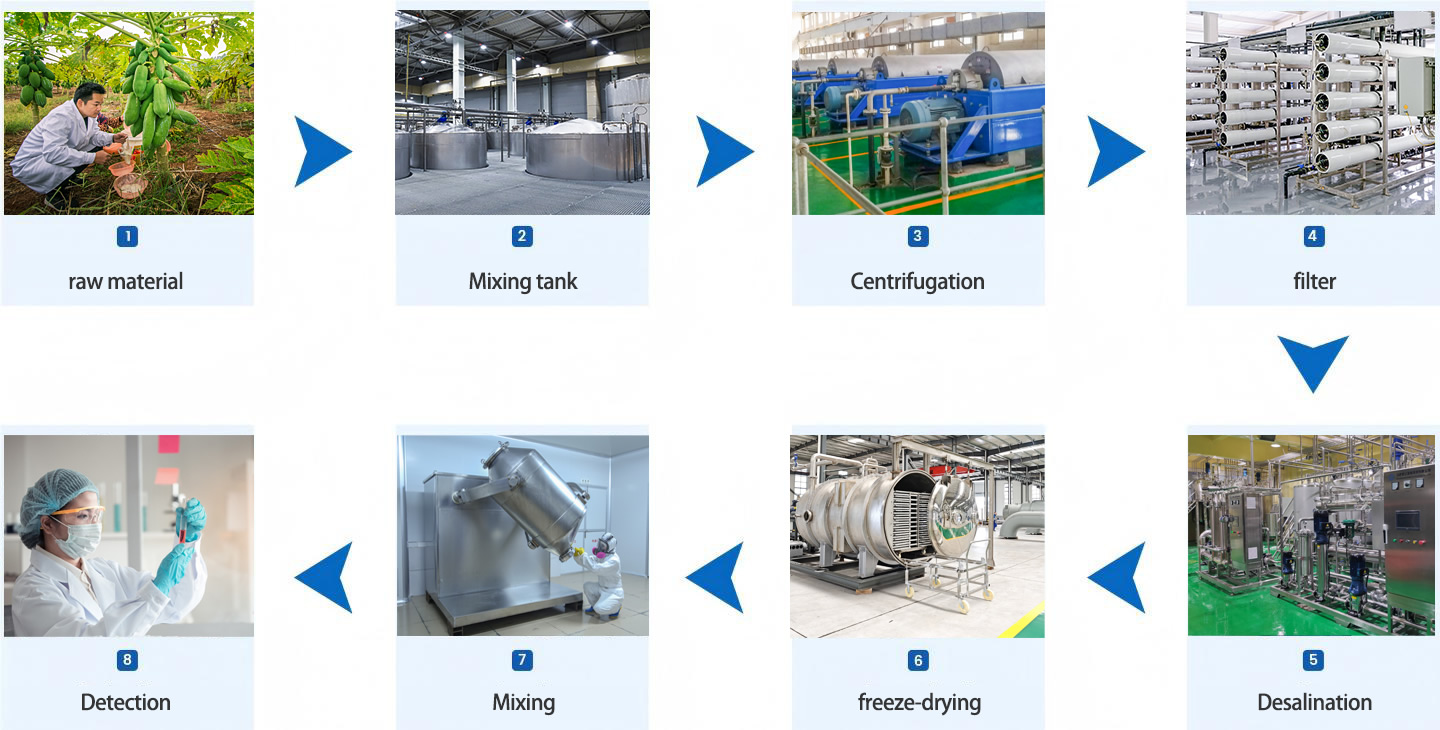
Applications
| Aquatic attractants |
Protein peptides |
Seasonings |
| Fermentation and brewing |
Notices